Hostinger vs Bluehost vs SiteGround: Which Host Actually Earns Your Money?
StackReview is reader-supported. When you buy through links on our site, we may earn an affiliate commission. This never influences our scores.
Summary
Hostinger wins on value, SiteGround on support and polish, Bluehost only if you live inside the WordPress ecosystem.
Best for: Anyone stuck choosing between the three most-recommended shared hosts
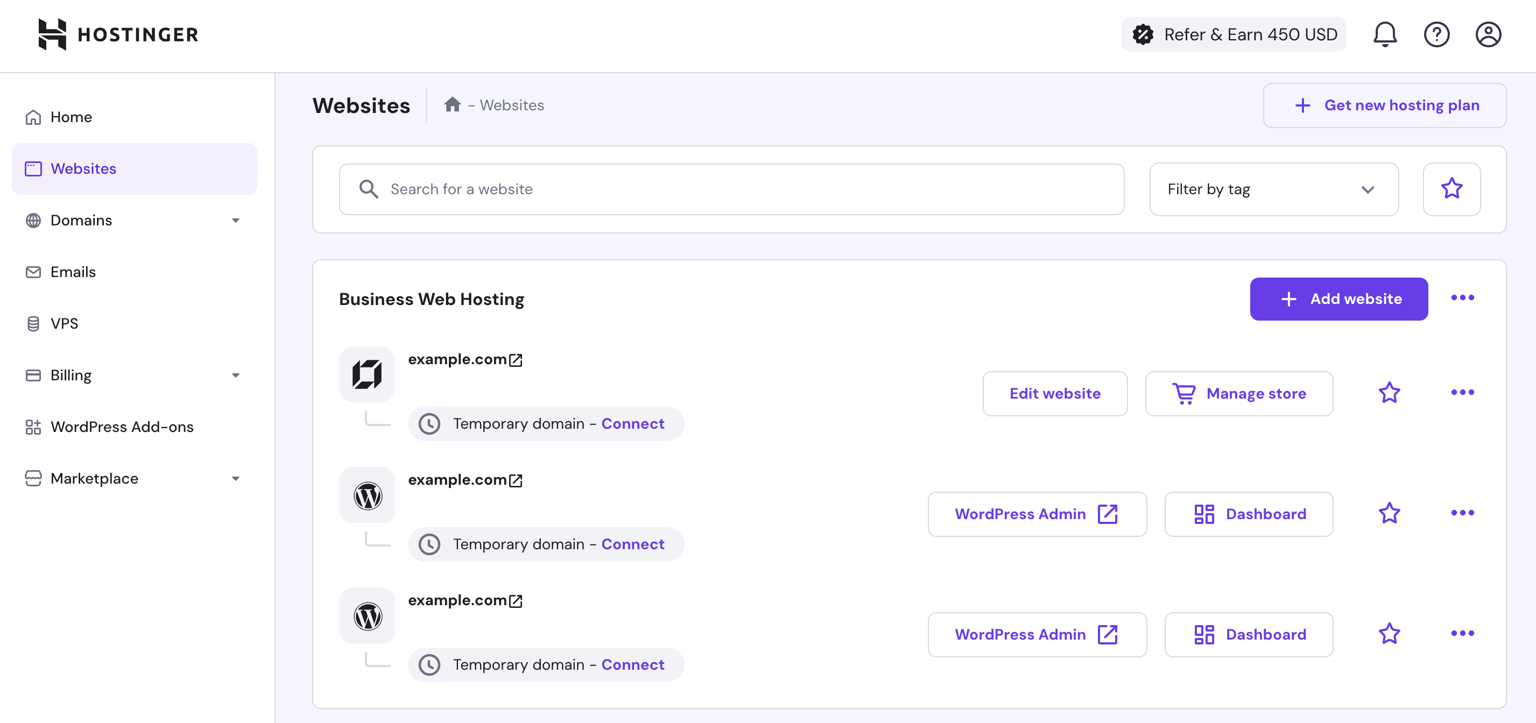
How we compared them
We've hosted real sites on all three platforms. This comparison focuses on what you feel after purchase: the dashboard you'll live in, how sites perform on entry plans, what renewal invoices look like, and what happens when you need help at 2 a.m.
The short version
| Hostinger | Bluehost | SiteGround | |
|---|---|---|---|
| Best for | Overall value | WordPress beginners in the US | Support & reliability |
| Control panel | Custom hPanel | cPanel-based | Custom Site Tools |
| Intro pricing | Lowest | Low | Mid |
| Renewal shock | High jump | High jump | Highest tier prices |
| Free domain | Most plans | First year | No |
| Backups | Weekly; daily on higher tiers | Varies by plan | Daily on all plans |
| Support | 24/7 live chat | Phone + chat | 24/7 chat, famously fast |
Control panels: hPanel vs cPanel vs Site Tools
Hostinger's hPanel and SiteGround's Site Tools are both modern, custom-built, and beginner-friendly. Bluehost wraps cPanel in its own onboarding layer — functional, and familiar if you've hosted before, but it shows its age. For a first-time site owner, hPanel is the gentlest learning curve of the three.
Performance
On entry-level shared plans, Hostinger's LiteSpeed stack and SiteGround's Google Cloud infrastructure both delivered consistently quick, stable response times in our use. SiteGround's caching (SG Optimizer) is excellent for WordPress. Bluehost is adequate for modest traffic but was the least impressive of the three in day-to-day snappiness.
Pricing over three years
This is where the three diverge hard. Hostinger's long-term intro deals are the cheapest way to host a real website, but renewals rise sharply — the trick is committing long enough upfront. Bluehost follows the same intro-then-jump pattern at slightly higher absolute prices. SiteGround charges the most, especially at renewal, and doesn't include a free domain; you're paying for the support and infrastructure, not the sticker price.
Support
SiteGround's support reputation is earned — fast, competent, and patient, on every plan. Hostinger's live chat impressed us more than we expected at its price point. Bluehost offers phone support, which the other two don't, but chat quality was inconsistent in our experience.
The verdict
- Choose Hostinger if you want the most site for the least money and you're happy in chat-based support. It's our default recommendation for makers, freelancers, and small teams.
- Choose SiteGround if uptime, backups, and having an expert answer in minutes are worth paying double for — agencies and businesses with revenue on the line will feel the difference.
- Choose Bluehost if you want phone support and the classic WordPress-recommended path, and you mostly serve a US audience.
Every link to these hosts on StackReview may be an affiliate link — as always, that never changes how we score them.
Pricing
All three lean on low intro prices with higher renewals; exact rates change often. Figures referenced are indicative as of September 2026 — always check current pricing before buying.
Verdict
Hostinger wins on value, SiteGround on support and polish, Bluehost only if you live inside the WordPress ecosystem.
Visit Hostinger vs Bluehost vs SiteGroundAlternatives to consider
Get the next review first
One honest SaaS review in your inbox each week. No spam, unsubscribe anytime.
About the author
Sunny Dubey
Founder & Editor of StackReview. Sunny runs a digital marketing company in India and has spent years buying, deploying, and abandoning SaaS tools for his own team — every review here is tested, written, and scored by him after weeks of real use.
More from Sunny Dubey →